
Miss Emedeme
assisted by Debbie, Joyce & Mo
CURRICULUM
OVERVIEW
Click here for Year 1 overview

HOMEWORK
Weekly homework is set. Please see the expectation for Year 1 on the Home Learning Overview for more information.
For the spelling homework, please assist your child with this valuable part of their learning by ensuring they complete all homework to the best of their ability and provide them with support when necessary.
The spelling words should be revisited throughout the week to ensure your child can remember to spell them for their test on Wednesdays. You will receive your child’s spelling result in their reading record each week (these need to be in school every day).

R.E.

Autumn 1: Why did Jesus tell stories?
Autumn 2: What is in our school’s name?
Who is Who in the Nativity?
PE
At Boutcher, we follow the ‘Real PE’ approach. Real PE is a unique, child-centred approach that engages and challenges children in their PE lessons. It focuses on the development of agility, balance and coordination, healthy competition and cooperative learning. Real PE focuses on six key cogs, these are: Creative, Cognitive, Health and Fitness, Personal, Physical and Social.
Throughout the autumn term, we will be working through the ‘Personal’ (coordination and static balance) cog in our weekly PE lessons before moving onto ‘Social’ (Dynamic balance to agility & static balance)
Our PE day is: Thursday
USEFUL NOTICES
-
A child’s book bag with their reading pack (with reading record and reading book inside) are considered to be school uniform and must be in school each day.
-
Water bottles should be brought into class with your child’s name on.
-
Please ensure all items of your child’s uniform and PE kit are clearly labelled with their name to ensure they can be easily recovered if lost and minimise the cost of replacement.
-
PE will be on a Wednesday and you are to come to school wearing your kit.
-
Our library session is on a Tuesday so please have your library book in school to renew or change.
-
Homework is set on a Wednesday and must be uploaded on Google Classroom by the following Wednesday (9am)
-
Spelling tests will take place each Wednesday and results recorded in reading records.
HUMANITIES
Autumn 1:
Geography: What is it like here?
Autumn 2:
History: How am I making history?


SCIENCE
This term, we will be learning about seasonal changes during Autumn and Winter. Children will observe and describe the weather across the seasons. They will learn about how day length varies, according to the time of year. Children will be encouraged to document the weather across the year, to see how it changes with the seasons.
READING
Your child will be given a staged/phase book that will be taken home with them. There is no set day for changing books as children will be read to at different points in the week. To facilitate this, please ensure your child’s reading pack (with their book and reading record inside) is in their book bag every day. It is very important to hear your child read out loud each day and ask them questions about what they have read to check their understanding and develop their comprehension skills (see questions inside their Reading Record).
Their school reading book can be read more than once to ensure they not only read the words but most importantly, understand what it is about. Please remember to record the date and page number along with your signature. This helps us monitor your child’s progress.
In Key Stage One, we expect a minimum of 3 signatures a week, with one of these a written comment using the KS1 reading comprehension skills sheet that is in the front of your child’s reading record. If you read other stories, please feel free to write them in your child’s reading record too. I strongly encourage children to read other books from home or the library in addition to the stage book sent home from school.
As well as one-to-one reading, shared reading will take place in school, where children have opportunities to answer questions and discuss the texts with their peers. Children will also complete reading comprehension tasks in class.
At Boutcher, we promote a reading for pleasure environment and ensure that children have opportunities to choose texts more freely. Your child will spend time in our class reading corner and also have a weekly visit to the school library. Our library visit will take place on Wednesdays, so please ensure that, if your child borrows a library book, they have it in school on this day to be returned so that another book can be chosen to take home and enjoy. It is important to return books because we have spent thousands of pounds on resources for our library and every book that is not returned needs money to be replaced. Funding is very tight and books not being returned will have an impact on how our library is used.
ENGLISH
We will use a book-based approach to our writing lessons and develop our spelling, punctuation and grammar whilst embedding the phonics we have covered throughout the year.
Autumn 1
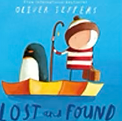
Reading: Oliver Jeffers author study
Writing:
Autumn 2
Reading: Big Feelings
Writing:
Children should know the alphabet and should be able to write each letter, in lowercase and capital letters. Handwriting practice is a good way to ensure letter formation is correct.


PSHE

At Boutcher School, we teach Personal, Social, Health Education (PSHE) and relationships as a whole-school approach to underpin children’s development as people and because we believe that this also supports their learning capacity. We use the Jigsaw Programme which offers us a comprehensive, carefully thought-through Scheme of Work which brings consistency and progression to our children’s learning in this vital curriculum area.
Autumn 1: Being Me in My World.
Autumn 2: Celebrating difference
RECOMMENDED READS
Please click here to see our Recommended Reads for Year 1. All of these books are available to borrow from our school library.
MATHS
Throughout the year, children in Year One will develop mental and written methods using addition, subtraction and counting, they will have opportunities to apply these skills to puzzles and mathematical problems and investigations.
Number focus:
-
Count to and across 100, forwards and backwards, in ones, beginning with 0 or 1 or from any given number
-
Count forwards and backwards in twos, fives and tens from 0 (to the 10th multiple)
-
Read and write numbers in numerals to 100
-
Read and write numbers in words to 20 and match to the numerals
-
Given a number between 1 and 100, identify one more and one less
-
Identify and represent numbers within 100 using objects, structured apparatus and number lines
-
Begin to recognise place value in two-digit numbers beyond 20 using practical apparatus
-
Use the language of equal to, more than, less than (fewer), most, least when comparing numbers/sets of objects to 100
We will also look at reasoning-based maths in relation to number.
Example- What is wrong with this sequence of numbers? 30, 29, 27, 26, 25. How do you know?
Click here for Maths Methods Handbook
